
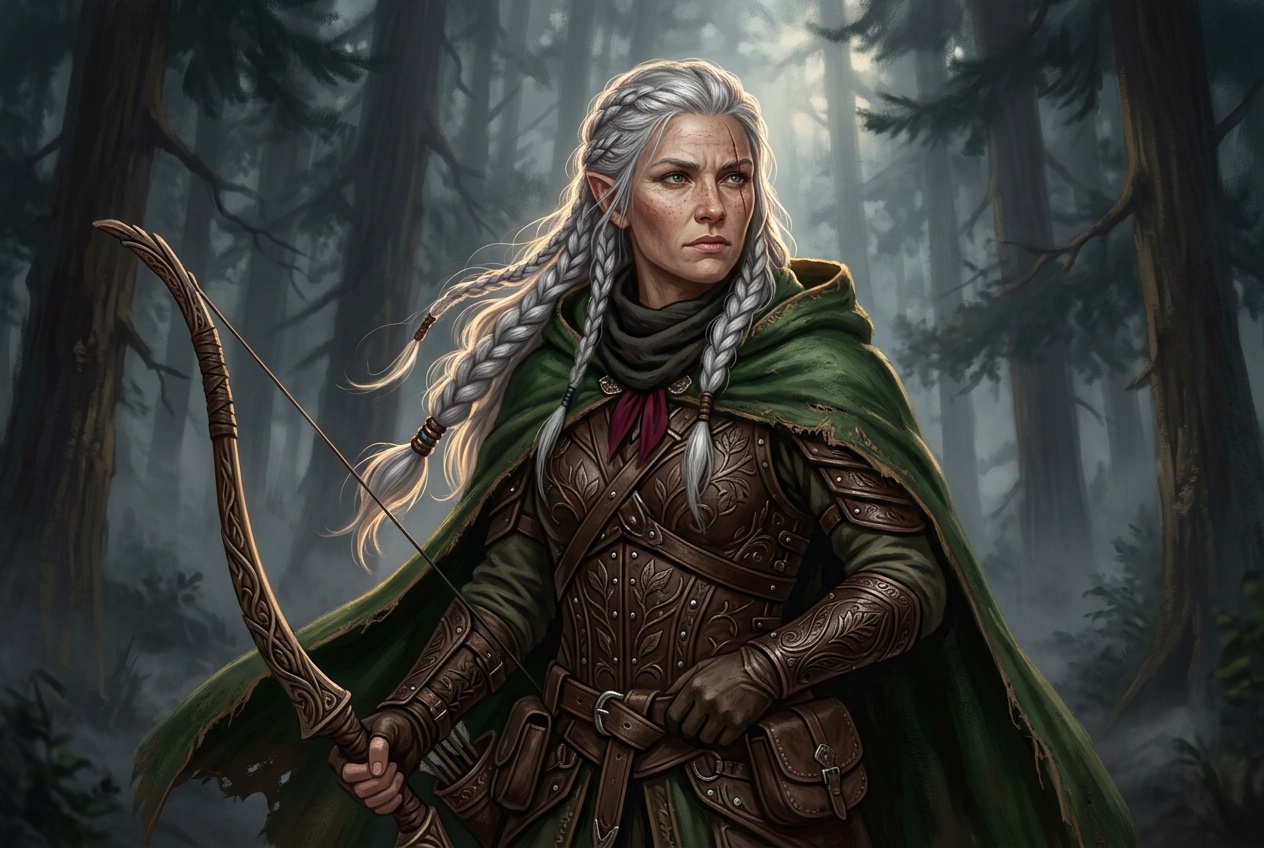
Great AI images rarely come from a few random keywords. They come from prompts that describe a scene the way a director or photographer would. Almost every strong image prompt contains the same building blocks.
1. Subject
Who or what is the focus? Be concrete. “A woman” gives you an average woman; “a 70-year-old beekeeper with silver braids and sun-weathered skin” gives you a character.
2. Action and setting
What is happening, and where? “Lifting a honey-filled frame from a hive in a lavender field at sunrise” adds story and context.
3. Composition
How is the shot framed? Close-up, wide shot, top-down, low angle, subject on the left with space on the right. Composition is often what makes an image feel professional.
4. Lighting and mood
Light creates emotion. Golden hour feels warm and nostalgic; overcast light feels calm; neon at night feels energetic; hard side light feels dramatic. Name the light source and direction when you can.
5. Style and medium
Is it a photograph, a watercolour, a 3D render, a vector illustration? Add anchors such as “35mm film”, “editorial fashion photography” or “children's book illustration”.
Putting it together
A photorealistic close-up of a 70-year-old beekeeper with silver braids, lifting a honey-filled frame from a hive in a lavender field at sunrise. Warm low sunlight from behind creates a glowing rim around her hair. Shot on an 85mm lens with shallow depth of field. Calm, golden atmosphere.
Common mistakes
- Stacking too many subjects in one image
- Contradictions such as “minimalist with lots of detail”
- Keyword soup like “4k, masterpiece, trending”, which adds little
- Forgetting the aspect ratio for where the image will be used